Stories of Celluloid is an ongoing, multi-chapter film project that traces camphor—the early material base of cinema—to explore the past lives and present condition of the moving image in an age of digital generation. Today’s AI images are built on vast archives, recombining fragments like memories from a previous life; images no longer appear in the instant of exposure but take shape through data and code. This structure isn’t unique to the digital era—it reaches back to cinema’s own origins in the forests where camphor was first harvested.
In the early twentieth century, camphor produced in Taiwan was essential to celluloid film stock, giving it flexibility and resilience. Yet camphor remained an invisible agent within image production, and with it a largely unacknowledged history—one entangled with colonial surveys, modernization projects, and Indigenous resistance.
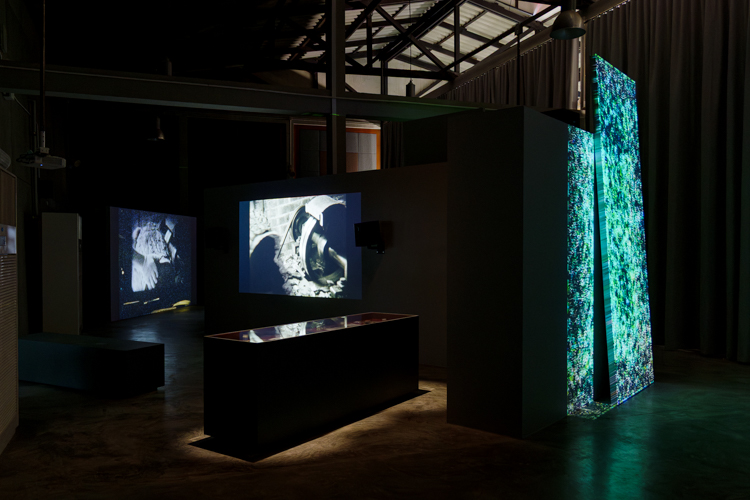
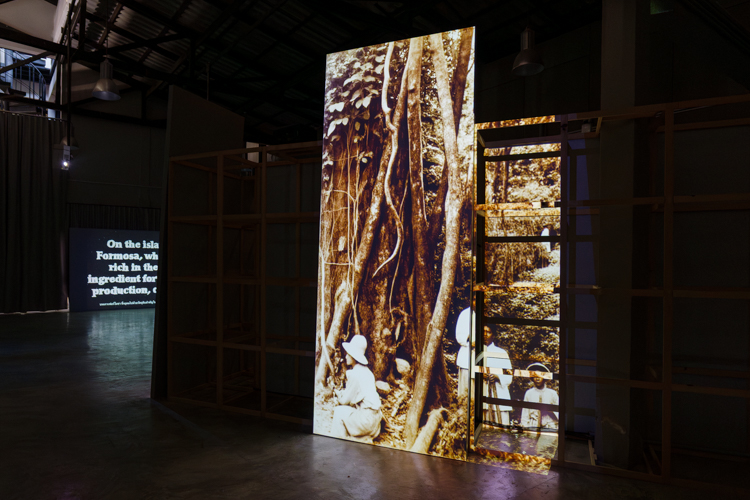 Stories of Celluloid Series, Installation view at Thailand Biennale, Phuket, 2025
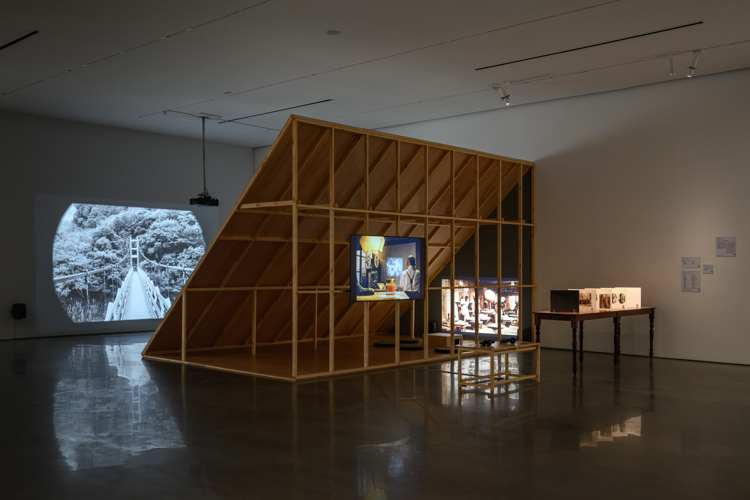
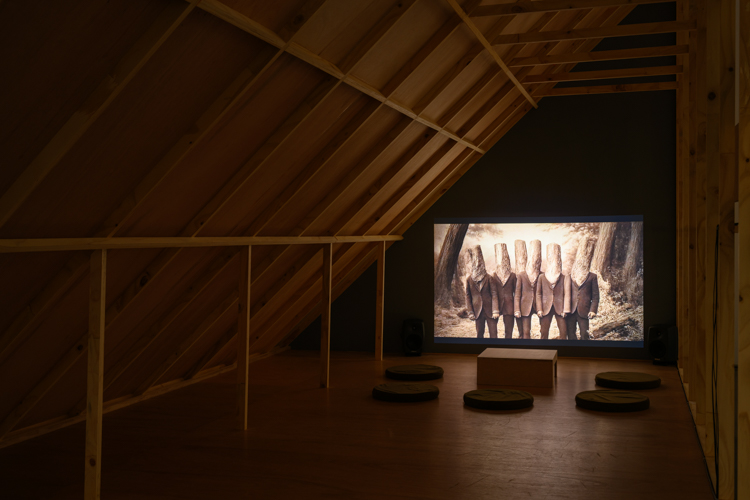 Stories of Celluloid Series, Installation view at Taichung Art Museum, 2025
The Exhibited Factory of Cinema
Single-channel video, Super 8 transferred to 2K digital with AI-generated imagery, 14 min, 2025
At the 1935 Taiwan Exposition, alongside camphor products on display, an actual camphor distillation shed was constructed on site, allowing visitors to witness the production process directly. It was the first time cinema appeared in an exhibition through the lens of “production,” and this moment was also captured in an amateur 8mm film. In this reimagined temporal space, the scent of camphor permeates the workroom: the exhibition is at once a site of material production and a historical hallucination assembled from datasets.
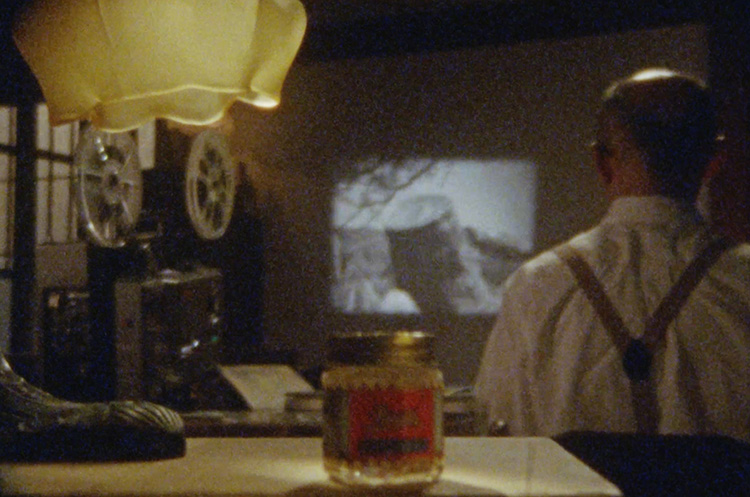
 Film still
Phantom Gaze
Single-channel video, Super 8 transferred to 2K digital with AI-generated imagery, and drone footage, 14 min 22 sec, 2025.
Fox Movietone News once shot an unreleased newsreel depicting Taiwan’s camphor industry. The journey begins as the camera lands at Keelung Harbor, follows rail carts deep into mountain valleys, and ends with a phantom ride shot along a suspended bridge. Yet the voyage does not conclude there. The gaze ultimately originates from a fortress perched atop the hills, where the rifle slits reveal more than camphor forests—they frame a layered, time-folded colonial frontier.
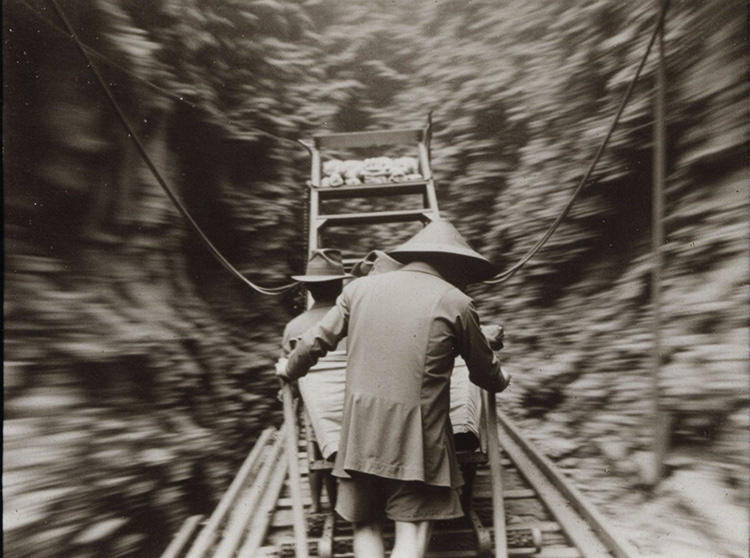
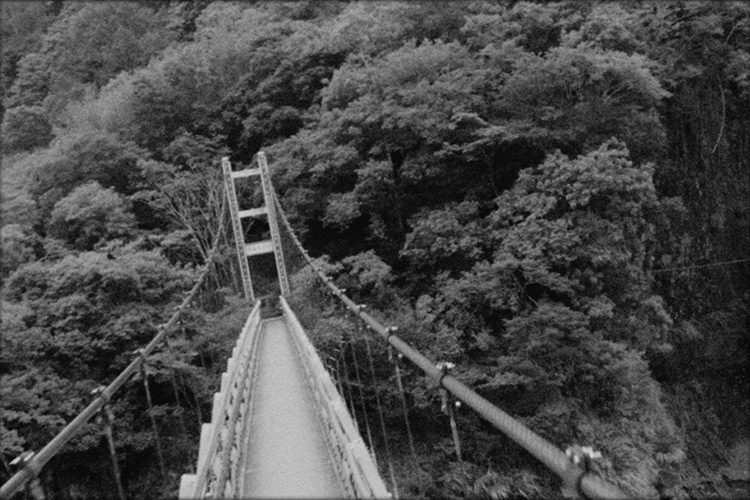 Film still
Terra Nullius Data
Single-channel video, Super 8 transferred to 2K digital with AI-generated imagery, 13 min, 2024.
Camphor, once essential to the base of celluloid film, now lingers only in a few surviving camphor distillation sheds and within fragments of colonial era fiction. Entering these fractured memory spaces, the histories of forest clearing and resource extraction transform into fertile ground for today’s AI training datasets. Figures of camphor trees and camphor bureau workers splinter and recombine under the heat of distillation, generating new historical phantoms—an unclaimed, ever-rewritten territory of data.

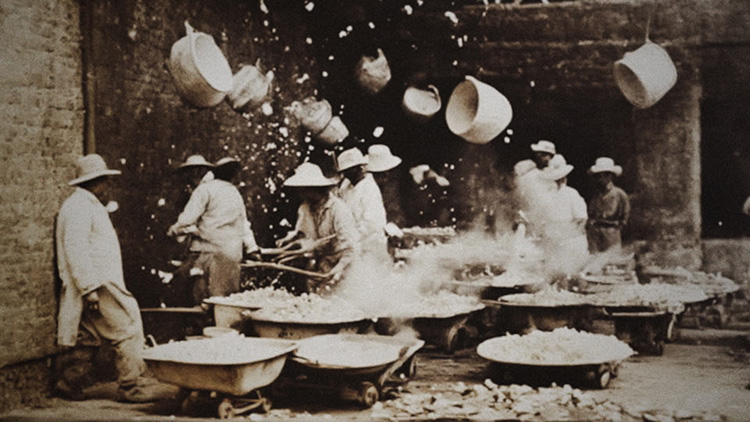 Film still
The Way (After Chen Huo-quan)
Digital prints from AI-generated imagery, newspaper microfilm reproduction, and medicinal ointment, dimensions variable, 2025.
》人工智慧生成圖像數位印刷、報紙微縮底片再製影像、藥膏,尺寸視空間場合而定,2025s.jpg) Installation view at Kaohsiung Museum of Fine Arts
Installation view at Kaohsiung Museum of Fine Arts
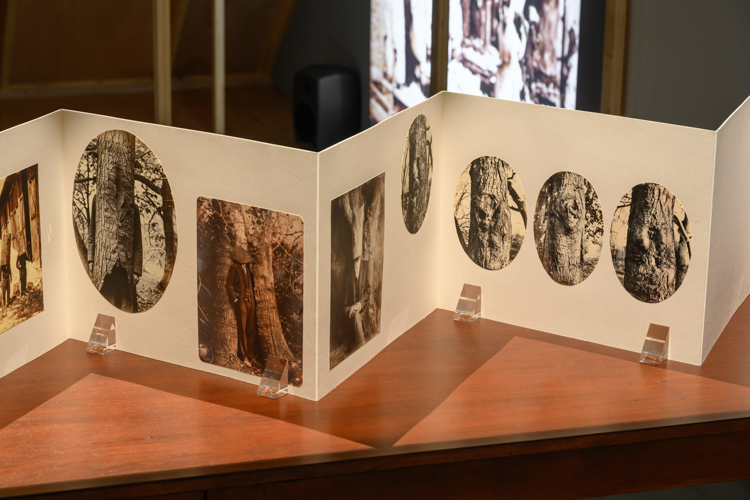 Installation view at Taichung Art Museum